Soaked leather boots will rot, shrink, and delaminate if dried improperly. Saturated full-grain cowhide and nubuck absorb up to 30 percent of their dry weight in water during river crossings or prolonged rain. When forced dry by extreme heat, the polyurethane or EVA midsoles debond from the leather lasting board, causing the outsole to peel clean off the boot on the trail.
Safe field drying demands steady airflow, passive desiccant action, and moderate ambient temperatures between 15 and 25 degrees Celsius. The procedure below preserves the chemical bonds in modern footwear cements while pulling trapped moisture out of the dense foam padding around the heel counter and the enclosed toe box.
Removing insoles and laces for maximum ventilation
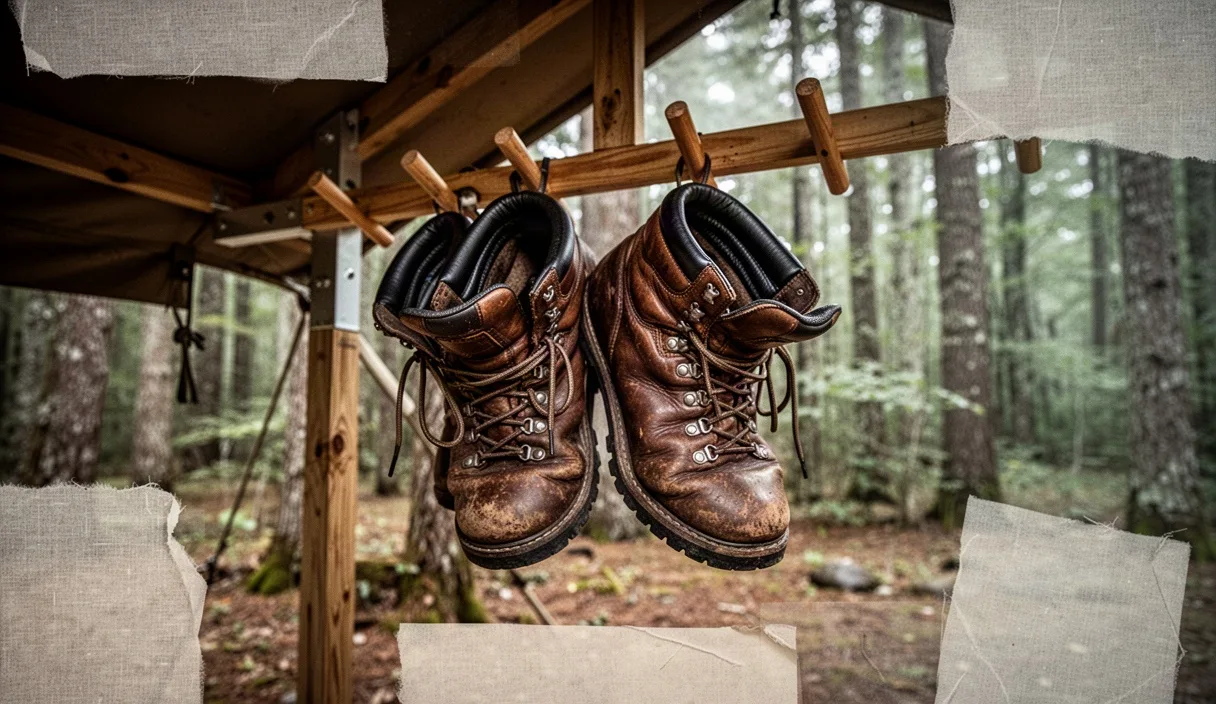
Strip the hardware immediately after pitching camp. Pull the laces completely out of the upper eyelets, speed hooks, and webbing loops. Leaving laces tensioned traps moist air behind the padded bellows tongue, where dampness persists up to four times longer than on exposed exterior leather. Open the throat of the boot fully, folding the tongue outward toward the toe to expose the footbed cavity.
Slide your hand flat inside to lift the aftermarket or factory insoles. Insoles are constructed with closed-cell or open-cell EVA foam bonded to a fabric top-sheet; this foam retains puddles beneath its non-porous underside. Stand the removed insoles vertically against a tent strut, a pack frame, or a tree branch off the wet ground so wind hits both sides simultaneously.
- Unthread laces past the lowest locking eyelet to let the vamp leather relax.
- Inspect the footbed floor for silt, grit, and pine needles that abrade stitch lines.
- Wipe out pooled water from the strobel board using a pack towel or bandana.
- Prop the leather tongue forward using an upright twig or dry stick to hold the throat open.
Leaving the insole inside a saturated boot creates an airtight seal over the lasting board. In cement-lasted boots, moisture pooled under an insole softens water-based primers over a 12-hour rest period, leading directly to edge delamination along the heel seat.
Using natural moisture wicking materials inside the toe box
Dense toe caps block cross-ventilation. You must draw water out from within the cavity using high-absorbency contact materials. Unprinted newsprint remains the top field-tested choice because its unbleached mechanical wood pulp draws liquid via capillary action without transferring toxic ink chemicals to the Gore-Tex membrane or cambrelle lining.
When newsprint is unavailable, carry compressed paper shop towels or use clean, dry wool garments from your pack. Avoid synthetic microfiber clothes for stuffing: polyester fibers hold surface water but lack the rapid capillary draw of dry cellulose pulp. Pack the toe box firmly, pushing the paper all the way into the end of the footbed so it makes hard contact with the internal toe stiffener.
| Absorbent Material | Capillary Draw Rate | Field Packability | Replacement Interval |
|---|---|---|---|
| Unprinted newsprint | Fastest (cellulose fiber) | High (folds flat in zip bag) | 45 to 60 minutes initially |
| Blue cellulose shop towels | High (tear-resistant wet) | Very high (compact roll) | 60 to 90 minutes |
| Dry merino wool spare socks | Moderate (absorbs vapor) | Requires carrying dedicated spares | 2 to 3 hours |
| Standard camp wood shavings | Slow to moderate (species dependent) | Found on trail (dry spruce/pine) | Single overnight use |
Check the stuffing after 45 minutes. Saturated paper stops drawing water once its fibers reach equilibrium with the lining. Pull the soggy wad out, discard it in a trash bag or burn it on a low utility fire, and pack a fresh, dry ball into the toe. Three cycles of replacement over an evening pull out the bulk of the standing water trapped within the upper padding.
Why direct campfire heat ruins cemented sole bonds
Campfire embers, hearthstones, and portable propane heaters destroy technical boots. Modern backpacking footwear relies on polychloroprene, polyurethane, or hot-melt adhesives to laminate the rubber outsole, cushioned midsole, and leather upper together under hydraulic presses. These adhesive layers soften and transition back to a semi-liquid state at temperatures starting as low as 45 degrees Celsius.
When placed within two meters of an open fire, radiant heat hits the thin perimeter of the rand first. The rubber rand expands at a different rate than the wet leather underneath. This thermal shock snaps the vulcanized chemical bond. The sole separates at the toe flex point, creating a gap that scoops up debris and water on the next day of hiking. Boot repairs with field barge cement rarely hold on heat-crystallized surfaces.
Excessive heat also ruins the natural protein structure of wet hide. Full-grain leather consists of collagen fibers stabilized by chemical tanning agents. Rapid heating causes these fibers to contract irreversibly: the hide hardens, shrinks across the bridge of the foot, and develops micro-cracks along the flex creases. Once leather fibers shrink from dry heat, no amount of oil or balm can restore their original flexibility or tensile strength.
Treating dried leather uppers with conditioner wax
Water strips natural and factory oils out of hide as it evaporates. When the outer leather is roughly 80 percent dry, damp to the touch but no longer exuding water droplets under thumb pressure, apply a maintenance coat of conditioner or wax. Treating leather while it retains slight moisture allows water-based emulsions or breathable fluorochemical creams to penetrate deeply into the open pores.
Select your treatment based on the tanning type. Nubuck and rough-out leathers require liquid spray conditioners to preserve nap and breathability. Full-grain oil-tanned leather requires a heavy beeswax or carnauba formulation to rebuild the protective barrier against rock scuffs and water penetration.
- Clear caked mud and sand from the seams with a stiff nylon utility brush.
- Place a marble-sized dab of wax onto a clean rag or your bare fingers.
- Work the wax into the hide using tight, circular motions across the vamp and flex zones.
- Drive the compound directly into the double-needle stitching along the welt line.
- Allow 20 minutes for absorption, then buff away the hazy excess with a dry cloth.
Avoid neat's-foot oil or pure animal lard on technical trekking boots. These heavy oils over-soften internal counters, rot nylon stitching over time, and compromise the breathability of underlying waterproof-breathable boot booties.
Packing dry spare socks for morning blister prevention
No field-drying technique removes every trace of moisture from closed-cell ankle collar foam overnight. Expect your boots to feel cool and slightly clammy at dawn. If you step into damp boots with socks that are already worn, damp, or dirty, the friction coefficient spikes immediately, guaranteeing heel blisters within three kilometers.
Pack a minimum of three sock pairs on any multi-day trip, isolated inside a silicone-coated dry sack. Dedicate one pair purely for sleeping in camp, one clean spare pair for the trail, and one active hiking pair. A dense loop-knit merino wool sock running at 70 to 80 percent wool content cushions the foot while absorbing moisture into the core of the fiber, keeping your skin dry even against an imperfectly dried boot lining.
Layering thin nylon or polypropylene liner socks beneath thick wool socks provides an additional barrier against damp friction. The thin liner stays pinned to the foot while the outer sock rubs against the moist boot interior, absorbing the mechanical shear forces that tear epidermis. If your boots remain wet in the morning, dust your feet and the inside of your fresh socks with unscented talc, cornstarch, or foot powder to reduce wet friction further.
Common mistakes
Drying gear under pressure leads to poor trail choices. Avoid these frequent errors that cause gear failure:
- Leaving boots upside down on vertical sticks. This pools moisture inside the toe box against the internal leather rand instead of letting moisture evaporate upward out of the throat.
- Baking boots inside a sealed tent vestibule on hot, sunny mornings. Trapped humidity turns the vestibule into a greenhouse, retarding evaporation and heating the sole cement.
- Using electric hair dryers or vehicle exhaust vents on max heat. Air blown over 50 degrees Celsius melts nylon stitching and delaminates the toe bumper within minutes.
- Failing to clean river grit before drying. Fine silt dries into micro-abrasives that cut through internal lining fabrics once you begin walking again.
Next steps for trail and home care
When you finish your trek, pull the insoles immediately before loading your gear into the vehicle. Transport damp boots in an open mesh duffle rather than sealed inside plastic trash bags, which fosters mold and leather rot in a warm car trunk.
At home, wash the boots under a cold tap with a specialized footwear wash to remove mineral deposits, road salts, and organic grime. Air-dry them indoors away from radiators, using an electric convection boot dryer that runs on ambient, unheated air. If the sole edges have begun to separate or the rand shows open pockets, take the boots to a licensed cobbler for industrial re-cementing before taking them back into backcountry terrain.